
How to store test sieves correctly between uses?
It is important to store test sieves correctly, as otherwise it may result in sampling errors and skewed results. The test sieves should always be clean and dry before storage, and labeled if possible, to avoid confusion during testing.
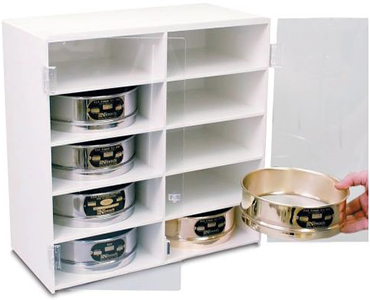
1. Clean the sieves
Before storing, make sure to clean the sieves properly to remove any leftover particles or debris. You can use a soft-bristled brush or compressed air to clean the mesh thoroughly without damaging the wires.
2. Dry the sieves
Once the sieves are cleaned, allow them to dry completely before storing. You can air-dry them or use a clean, dry cloth to gently remove any moisture.
3. Store in a clean, dry place
The ideal storage location for test sieves is a clean and dry area. Avoid storing sieves in areas with high humidity or where they may be exposed to moisture, as this can lead to corrosion or damage to the mesh, ultimately affecting the accuracy of the sieve analysis.
4. Protect the sieves
To protect the sieves from dust and other contaminants, store them in a cabinet with a door. In addition, you must stack the clean test sieves on top of each other to maintain their structural integrity.
5. Label the sieves
To avoid confusion, label each sieve with its respective mesh size and keep a record of the calibration date and any other relevant information.
By following these steps, you can ensure that your test sieves are stored correctly and remain accurate for their intended use. Do reach out to us for any queries you might have on the storage of your test sieves.


Need Expert Advice?
Our engineers are ready to help you optimize your particle analysis process.